
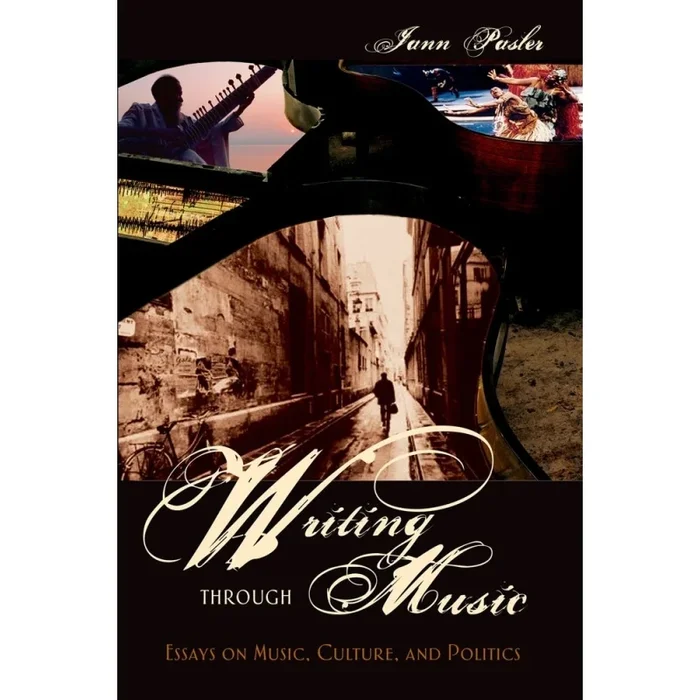
Description
Drawing on a remarkably diverse interdisciplinary toolbox, Jann Pasler invites us to read as she writes through music, unveiling the forces that affect our sonic encounters. Writing through Music brilliantly demonstrates how music can be a critical lens to focus the contemporary critical, cultural, historical, and social issues of our time.
CONTENTS
Foreword by George E. Lewis
Introduction
Part I: Time, Narrative, and Memory
1. Narrative and Narrativity in Music
2. Postmodernism, Narrativity, and the Art of Memory
3. Resituating the Spectral Revolution: French Antecedents
Part II: Self-Fashioning
4. Deconstructing d’Indy, or the Problem of the Composer’s Reputation
5. New Music as Confrontation: The Musical Sources of Cocteau’s Identity
6. Inventing a Tradition: John Cage’s Composition in Retrospect
Part III: Identity and Nation
7. Pelleas and Power: Forces behind the Reception of Debussy’s Opera
8. The Ironies of Gender, or Virility and Politics in the Music of Augusta Holmes
9. Race, Orientalism, and Distinction in the Wake of the Yellow Peril
Part IV: Patrons and Patronage
10. Countess Greffulhe as Entrepreneur: Negotiating Class, Gender, and Nation
11. The Political Economy of Composition in the American University, 1965-1985
Part V: The Everyday Life of the Past
12. Concert Programs and Their Narratives as Emblems of Ideology
13. Material Culture and Postmodern Positivism: Rethinking the Popular in Late Nineteenth-Century French Music
Appendices
Appendix 1. Definitions of Terminology Used in Chapter 1
Appendix 2. Public Performances and Publications of Music by Augusta Holmes
Appendix 3. Relationship between NEA Support and Composers’ Educational Background
Appendix 4. Relationship between NEA Support and Composers’ Institutional Affiliation
Appendix 5. Educational Background and Institutional Affiliation of Most Frequent NEA Panelists
Appendix 6. Winners of Largest NEA Composer Grants Each Year, 1973-1985
Index
Reviews
There are no reviews yet.