
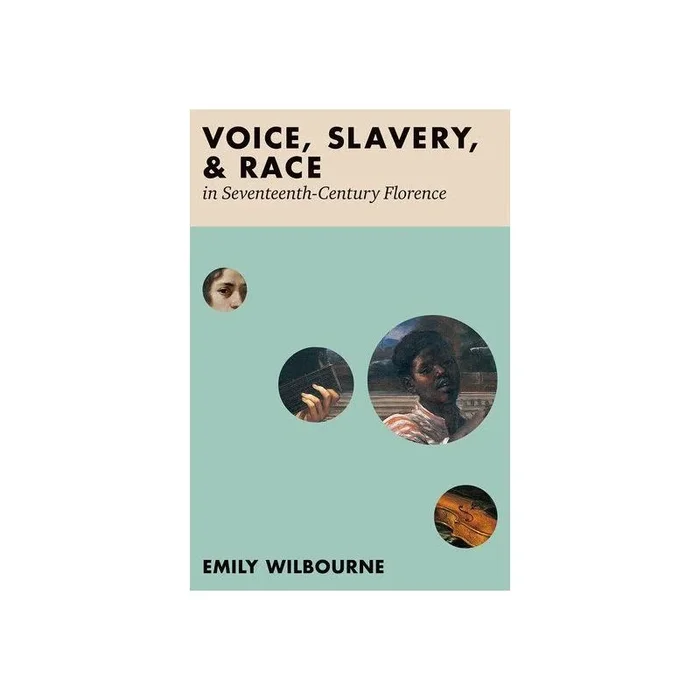
Description
| Pages | 520 |
|---|---|
| Publication Date | 22 March 2024 |
| ISBN | 9780197646915 (0197646913) |
| EAN | 9780197646915 |
- Features new archival work documenting the presence of enslaved and racially-marked individuals in seventeenth-century Italy
- Integrates historical facts and data with a critical-theoretical analytic that considers the consequences of early modern slavery at an epistemological and historiographical level
- Includes sound, music, and the voice in the history of race and race in the history of Western classical music
Voice, Slavery, and Race in Seventeenth-Century Florence argues for the power of sound — particularly musical and vocal sounds — to systems of racial and ethnic difference. Foregrounding newly discovered archival sources, Emily Wilbourne documents the significant presence of foreign and racially-marked individuals in Medici Florence, many of whom were living under conditions of slavery or unfree labor. This book considers how the musical and verbal sounds of these individuals were recruited to represent or communicate access to subjectivity, agency, and voice.
Contents
- Prologo
- Introduction
- ACT ONE
- Scene 1: Songs to Entertain Foreign Royalty
- Scene 2: Comic Songs Imitating Foreign Voices
- Scene 3: Music all’usanza loro (or Performed in a Foreign Way)
- Scene 4: Turkish Music in Italy
- Scene 5: Trumpets and Drums Played by Enslaved Musicians
- Scene 6: Scholarly Transcriptions of Foreign Musical Sounds
- Scene 7: Music Proper to Enslaved Singers
- Intermezzo: Thinking from Enslaved Lives
- ACT TWO
- Scene 8: Introducing Giovannino Buonaccorsi
- Scene 9: Buonaccorsi Sings on the Florentine Stage
- Scene 10: Buonaccorsi as Court Jester
- Scene 11: Buonaccorsi as a Black Gypsy
- Scene 12: Buonaccorsi as a Soprano
- Scene 13: Buonaccorsi Sings on the Venetian Stage
- Intermezzo II: Thinking from Giovannino Buonaccorsi’s Life
- Epilogo (Axiomatic)
- Index



Reviews
There are no reviews yet.